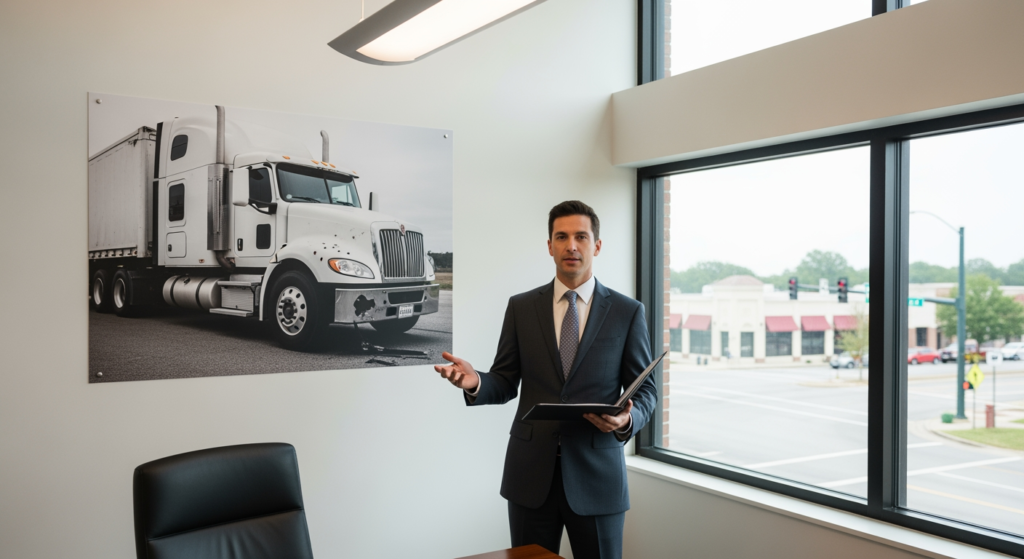
If you or a loved one were injured in a crash with a commercial truck, it helps to know your options and act quickly. I recommend talking to an 18 wheeler wreck lawyer in homeland park sc who knows how to handle heavy-truck claims and the unique rules that apply to them. For context on the scale and danger of large-truck crashes nationwide, the National Highway Traffic Safety Administration keeps clear, up-to-date information on trends and safety guidance at NHTSA.
Why truck crashes in Homeland Park and Anderson demand special handling
Truck collisions are rarely simple fender-benders. When an 18-wheeler is involved, the forces are larger, the damage greater, and the legal and insurance issues more complex. In the Homeland Park area of Anderson, SC, the mix of local streets, commuter traffic, and nearby highway freight corridors raises the risk that a serious truck crash will involve multiple parties: the driver, the trucking company, vehicle manufacturers, and sometimes freight shippers.
I focus on explaining how those differences matter to your recovery. Businesses that run fleets often have teams of investigators and high-powered insurance defense lawyers ready to limit payouts. That imbalance makes it especially important for people hurt in this area to preserve evidence quickly, to document injuries thoroughly, and to understand the timelines and reporting rules that affect truck crash claims in South Carolina.
How commercial-truck cases differ from regular car crashes
Compared to collisions between passenger cars, truck wrecks often involve:
- Higher medical bills and longer recovery times because of the mass and height difference between trucks and cars.
- Federal rules that govern driver hours, vehicle maintenance, and record keeping, which create key evidence points.
- Multiple potentially liable parties, including trucking companies, leasing companies, and maintenance shops.
- More aggressive insurance defenses and higher insurance policy limits to pursue for fair compensation.
Common causes of 18-wheeler wrecks near the city
Understanding why truck crashes happen helps you see where to look for responsibility. In this area, common causes I’m asked about include:
- Driver fatigue, even with electronic logging devices in use.
- Improperly loaded or unsecured cargo that shifts and causes loss of control.
- Speeding, unsafe lane changes, and blind-spot interactions between trucks and smaller vehicles.
- Poor vehicle maintenance—brakes, tires, and lights that fail under load.
Those causes aren’t just theoretical. They guide what evidence we look for in the first days after a crash: logbooks, electronic logging device (ELD) records, maintenance receipts, dash-cam and store/traffic camera footage, and witness statements.
Step-by-step: What to do after an 18-wheeler crash
Taking certain steps right after a collision improves your safety and preserves the strongest possible claim. Here’s a clear checklist I give people to follow, in order:
- Get medical care immediately. Even if you feel okay, some injuries show up later. Medical records are the foundation of injury claims.
- Call the police and make sure an official report is created. This report is often a primary piece of evidence in a truck crash case.
- Document the scene—take photos of vehicles, injuries, skid marks, road conditions, and any cargo that shifted. If you can, record the truck’s company name and the driver’s license information.
- Preserve evidence. Do not repair your vehicle before getting legal advice; preserve receipts, towing records, and any communication with insurers.
Following these steps does not commit you to a lawsuit, but it leaves options open. In my experience, clients who act quickly and document thoroughly have better outcomes whether they settle or take a case to trial.
Key evidence that makes or breaks a truck accident case
Truck cases rely on documentary and technical proof more than typical car cases. Here’s what I focus on gathering and why it matters:
Driver records and ELD data. These show hours driven, rest periods, and can prove fatigue or violations of federal hours-of-service rules. An ELD can be a game-changer if it contradicts a trucker’s account.
Maintenance and inspection logs. If a brake or tire problem caused the crash, maintenance records and inspection reports can show that the carrier failed to maintain the vehicle properly.
Black box and GPS data. Many trucks capture speed, braking, and GPS location data. That data can reconstruct the moments before impact.
Cargo and load documentation. Overloaded or unsecured cargo often shifts and causes loss of control. Bills of lading and loading manifests help establish responsibility.
Witnesses, cameras, and the scene
Witness statements and video are often decisive. In Homeland Park and nearby neighborhoods, local businesses and traffic cameras sometimes record crashes. I advise clients to identify and preserve potential camera footage within days because many sources overwrite recordings quickly. Witness contact details and consistent statements give credibility that insurance companies respect.
How the legal process unfolds in Anderson County
Here’s a straightforward overview of what to expect when you pursue a claim after a truck wreck in the Anderson area. Knowing the stages helps you plan and avoid missteps.
Investigation and demand. After preserving evidence and getting medical care, most cases begin with an investigation. Your lawyer collects records, identifies defendants, and sends a demand to insurers asking for fair compensation.
Negotiation and settlement. Many truck cases settle without filing suit, but negotiations can be lengthy and involve multiple insurers. The trucking company’s insurer will often respond with recorded statements and requests for medical releases; it’s important to consult an experienced attorney before giving recorded statements or signing releases.
Filing suit and discovery. If settlement talks stall, your lawyer files a lawsuit. Discovery then unfolds—documents, depositions, and expert reports build your case for trial.
Resolution or trial. Most cases still settle before trial, but being prepared for court strengthens settlement leverage. Trials can secure full and fair awards when liability and damages are clear.
Questions I hear most from people injured by 18-wheelers
Below are common concerns and straightforward answers I give to clients in and around Homeland Park.
Will I have to go to court? Not usually. Many cases settle after effective negotiation. However, you should prepare as if your case might go to court—this preparation leads to better settlements.
How long do I have to file a claim in South Carolina? South Carolina law sets deadlines called statutes of limitations. Missing these deadlines can bar recovery. Because timelines vary by case type and defendant, it’s important to consult quickly.
What if the truck company denies responsibility? Denials are common. A thorough investigation—ELD data, maintenance logs, and expert reconstruction—can overcome denials and prove fault.
Trending topics shaping truck-accident claims right now
Two trends are changing how truck cases are won and defended:
Electronic logging devices and data-driven claims. ELDs have made driver hours and movements easier to track, creating clearer proof of fatigue or long-haul violations. ELD records are often among the first things I subpoena in a case.
Advanced safety tech and liability questions. New safety features such as automatic emergency braking and lane-keep assist are showing up on modern rigs. Manufacturers and fleet operators sometimes point to these systems as defenses, but those systems can also produce data and error logs that show failures or incorrect calibration. Understanding how to use that data is essential.
How much compensation can you expect?
There’s no simple answer. Awards depend on multiple factors: the severity of injuries, degree of fault, the strength of evidence, medical expenses, lost wages, and long-term impacts like permanent disability or reduced earning capacity. Insurance limits on truck policies are often higher than car policies, which sometimes means greater potential compensation—if liability is clear and damages are proven.
What I recommend when choosing a local truck-accident lawyer
Not every personal injury lawyer handles truck cases. When you interview lawyers near Homeland Park, look for these qualities:
- Experience with commercial truck litigation and familiarity with federal trucking regulations.
- Access to accident reconstruction experts, medical specialists, and investigators who can gather ELD and maintenance data quickly.
- A record of negotiating with large insurer defense teams and a willingness to take cases to trial when needed.
- Clear communication about fees, timelines, and what to expect at each stage of the claim.
Questions to ask during a free consult
Bring these four questions to any initial consultation so you can quickly compare options:
- How many truck or 18-wheeler cases have you handled that went to trial?
- Will you handle my case personally or delegate to a junior lawyer?
- What is your approach to preserving electronic evidence like ELDs and dash-cam footage?
- How do you charge fees and handle out-of-pocket costs for experts?
How local knowledge improves outcomes
Local experience matters. A lawyer who knows how local courts, medical providers, and insurers in Anderson operate can move faster and make better strategic choices. For example, knowing where traffic and security cameras are likely to exist, which hospitals document certain injuries thoroughly, and which judges encourage settlement can all affect how quickly you get help and how strong your settlement will be.
Practical tips to protect your health and your claim
Beyond the initial checklist, here are practical steps that help your health and your legal position in the weeks after a crash:
- Keep a daily journal of pain levels, mobility limits, and how injuries affect work and family life. These notes humanize your claim.
- Follow medical advice and complete prescribed therapies. Gaps in treatment can be used by insurers to dispute the severity of injuries.
- Preserve all bills, receipts, and wage statements. Documentation of expenses strengthens a damages claim.
- Avoid posting details about the crash or your condition on social media—statements can be used against you.
When to call a lawyer
I advise contacting a truck-accident lawyer as soon as medical needs are under control. Early involvement helps preserve critical evidence—ELD data, maintenance records, and video—that can be lost or altered. It also helps you avoid common mistakes like giving unrecorded or recorded statements to insurers without counsel. A lawyer can communicate with insurers and investigators on your behalf so you can focus on healing.
If you were hurt in Homeland Park or anywhere in Anderson, South Carolina, this is a stressful time. You don’t have to navigate it alone. A local truck-accident attorney can investigate quickly, protect your rights, and pursue fair compensation for your injuries, lost income, and pain and suffering.
When you’re ready, reach out for a free consultation. The team at The Dunaway Firm can review your case and explain your options in plain language.