[content]
When your home’s heating or cooling starts acting up, I always tell neighbors to read on — there’s usually a simple way to find the root cause before costs climb. For straight answers about energy efficiency and recommended upgrades, the U.S. Department of Energy is a great place to start for trustworthy guidance and rebates: U.S. Department of Energy. In this guide I’ll walk through how to spot real problems, quick troubleshooting, when to call a pro, and what smart upgrades actually save you money in the long run.
Why this matters now
Homes in this area are spending more than ever on heating and cooling. Rising utility prices and newer technologies mean small choices now — like a thermostat swap or a routine tune-up — can have a big effect on comfort and bills. I’ll keep things practical: what to try today, what to schedule for a professional, and how to avoid common upsell traps when technicians arrive.
How to spot HVAC problems early
Most system failures give clear signs if you know where to look. Catching problems early keeps repairs small and predictable. Here are the warning signs I watch for in my own and clients’ homes:
- Uneven temperatures from room to room or sharp cold/hot spots near vents.
- Longer run times and higher utility bills without a change in thermostat habits.
- Odd noises — rattles, grinding, or high-pitched squeals when the system starts or shuts off.
- Poor airflow from vents even when the system is running at full fan speed.
What those signs usually mean
Uneven temperatures often point to airflow issues: clogged filters, blocked registers, or duct obstructions. Increased runtime and bills usually indicate reduced efficiency from dirty coils, low refrigerant, or failing components. Strange noises are typically mechanical wear — bearings, belts, or fan blades. Not every sign is an emergency, but every sign deserves attention before it becomes a bigger bill.
Quick checks you can do in 10 minutes
Before you call anyone, these quick checks help you confirm whether a repair is urgent or a simple maintenance fix. I recommend doing them every season.
- Look at and replace the air filter if it’s visibly dirty — a clogged filter cuts airflow and strains the system.
- Make sure vents and returns are unobstructed by furniture, curtains, or clutter.
- Check the thermostat batteries and settings; fans left on or incorrect schedules add unnecessary runtime.
- Outside, clear debris and vegetation from around the condenser so air can flow freely.
When to call a trained technician
There are times when a DIY approach is the wrong choice. If you notice any of the following, schedule a professional inspection right away to prevent more serious damage:
Metallic grinding or loud banging sounds, persistent loss of cooling or heating despite thermostat changes, visible leaks near the indoor unit, or frequent short-cycling (turning on and off quickly) are all signs that components may be failing. A licensed technician will safely diagnose refrigerant levels, electrical systems, and moving parts — things that touchy DIY attempts can make worse or dangerous.
How pros diagnose problems — and what good service looks like
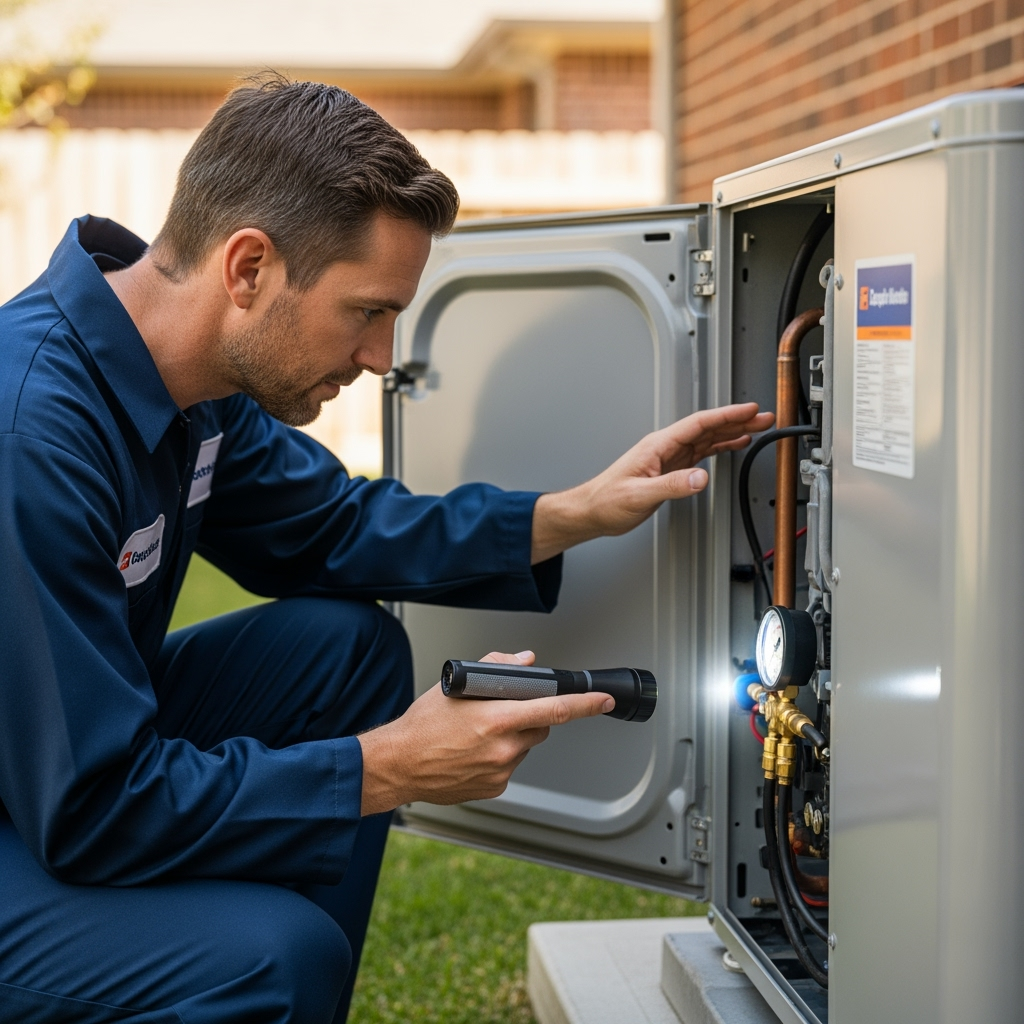
When a skilled technician arrives, I expect them to do these steps to find the root cause:
– A visual inspection of the outdoor unit, indoor air handler, and accessible ductwork to find visible issues.
– Measurement of airflow and temperatures at supply and return vents to check system balance.
– Refrigerant checks and electrical tests when cooling is poor or the unit won’t start.
– A review of the customer’s recent energy or comfort changes to correlate symptoms with behavior.
Good service includes clear explanations, a written estimate with options (repair vs. replace), and prioritized steps so homeowners can choose what to do now and what can wait. If you get anything less — vague reasons for work or high-pressure “today-only” deals — get a second opinion.
Smart upgrades that actually pay off
Not all upgrades deliver equal returns. Here are two trends worth your attention and why I recommend them for many homeowners:
Heat pumps and electrification
Modern heat pumps can both heat and cool with significantly higher efficiency than many older furnaces and air conditioners. They perform especially well in mild climates and have improved cold-weather performance in recent models. If your system is aging and you’re planning to stay in the home for five years or more, a heat pump is worth considering for long-term utility savings and simplified service.
Smart thermostats and zoning
Smart thermostats let you control schedules from your phone, learn usage patterns, and reduce wasted heating and cooling when no one’s home. Combined with basic zoning strategies — closing vents in unused rooms or adding dampers for separate zones — you can often drop bills 10–20% without major equipment work.
Cost expectations and budgeting tips
Repair, maintenance, and replacement costs vary by system size, age, and the problem at hand. Rather than memorize dollar amounts, I recommend this approach to budget smartly:
- Plan for an annual tune-up each spring and fall to keep efficiency high and catches small issues.
- Set aside a repair fund equal to 1% of your home value per year — HVAC repairs can be costly, and this keeps surprises manageable.
- If the system is 12–15 years old and needs a major repair, compare repair cost plus expected remaining life versus replacement cost and projected energy savings.
Indoor air quality and healthy home trends
Indoor air quality (IAQ) has moved from niche to mainstream, especially with greater focus on allergens, wildfire smoke, and overall respiratory health. Today’s practical IAQ strategies include improved filtration, proper ventilation, and targeted solutions like UV lights or humidifiers when appropriate. These solutions reduce dust and allergens and improve comfort without breaking the bank when paired with regular maintenance.
Action plan: what to do this season
Here’s a simple plan you can follow to keep comfort steady, avoid high bills, and make smart upgrades over time. I use a checklist like this for every home I advise:
- Replace or clean filters now and every 1–3 months depending on usage and pets.
- Schedule a professional tune-up at least once a year; do it before the heavy-use season.
- Install a programmable or smart thermostat and set sensible schedules for away and sleep times.
- Ask your technician about basic zoning tweaks and whether a heat pump or upgraded coil makes sense as longer-term investments.
Local considerations and neighborhood tips
Every neighborhood has its own HVAC quirks: older homes in historic districts often have ductwork that needs sealing or downsizing; newer subdivisions may use ductless mini-splits that need different service expertise. When possible, find a technician who’s familiar with common home styles in this area — they’ll recognize likely weak spots, like undersized duct runs in certain subdivisions or aging insulation in older builds.
If outdoor air quality issues (like wildfire smoke) are a concern, consider upgrading to higher-MERV filters and ensuring a fresh-air intake can be closed when needed. These are inexpensive steps that improve safety and comfort during poor-air events.
Common pain points and how I help homeowners avoid them
People often tell me they don’t want surprise repair bills or pushy recommendations. Here’s how to protect yourself in advance:
– Get a clear, written estimate and scope of work for any repair or replacement. A professional should be willing to explain the tradeoffs of different options.
– Ask for the technician’s license number and proof of insurance; reputable providers carry both. Request references or local reviews if you feel unsure.
– Don’t rush into full replacements unless multiple components are failing or the system is near the end of its expected life; targeted repairs and efficiency improvements often bridge the gap.
Wrapping up: what to prioritize this year
Start with the basics: replace filters, check vents, and schedule a preventative tune-up. If your system is older, compare projected repair costs versus replacement with a more efficient model like a heat pump. Add a smart thermostat and consider modest IAQ upgrades if you or your family struggle with allergies or if outdoor air quality is frequently poor.
If you want a local team that understands practical upgrades and clear pricing, I recommend reaching out to HHMEC for inspection and honest advice. They can help you prioritize repairs, evaluate efficiency upgrades, and put a service plan in place so your home stays comfortable year-round.