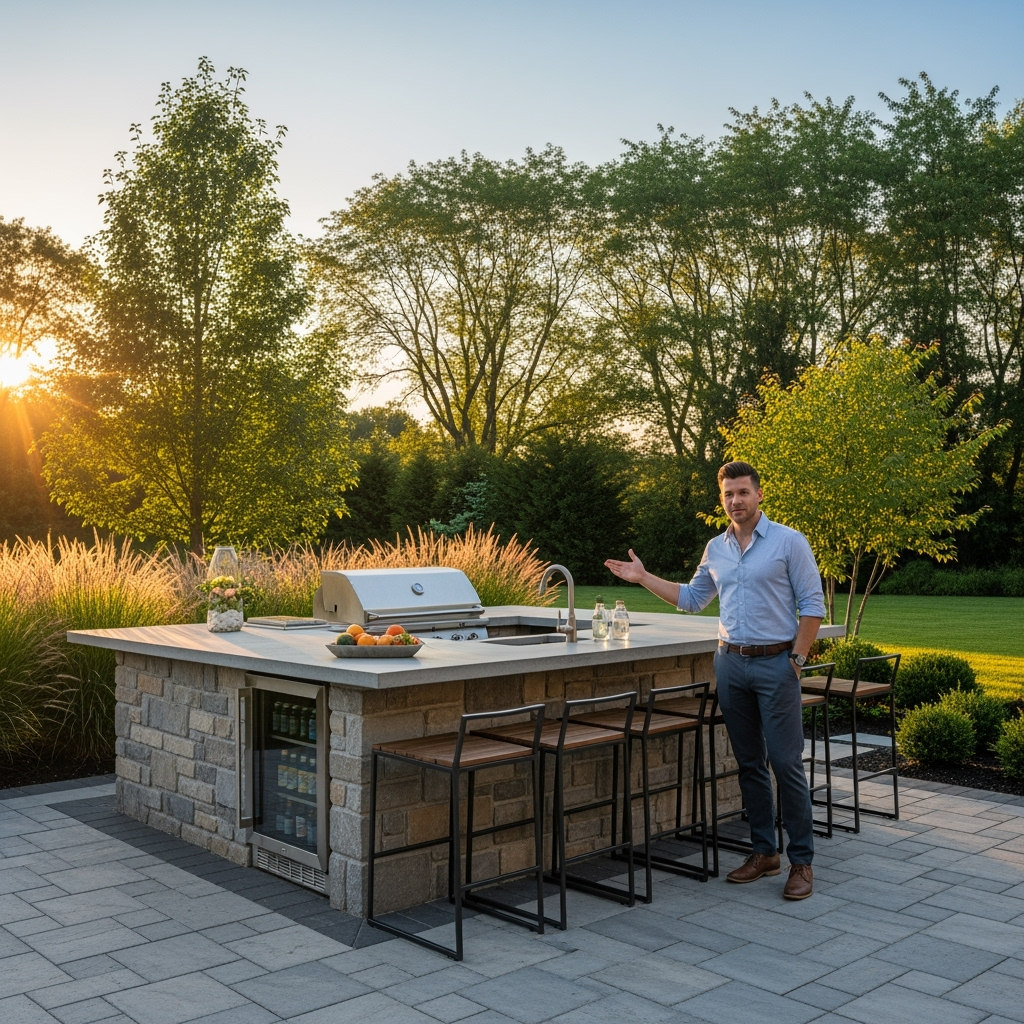
I love how a well-designed backyard can change the way you live at home. If you’re thinking about an outdoor bar island NJ, you’re joining a lot of homeowners who want more usable outdoor space for gatherings, cooking, and relaxing. For practical planning and local-weather considerations, I often check general guidance from federal agencies like the Environmental Protection Agency to make smart, sustainable choices for materials and plantings that handle heat and storms.
Why an outdoor bar island is the smartest upgrade for New Jersey yards
An outdoor bar island turns a yard from “nice” into a destination. In this region, where summers bring warm beach days and evenings can cool quickly, a bar island creates zones for cooking, dining, and lounging without forcing guests to move inside. It’s a functional centerpiece that improves flow between pool areas, patios, and the house. It also raises resale appeal because buyers picture a finished outdoor living experience when touring homes.
What people gain beyond aesthetics
When I design a bar island, I’m thinking beyond looks. Homeowners get a better entertaining layout, easier traffic flow during parties, an extra prep station for outdoor meals, and a social hub that keeps the cook included. A well-placed island also allows you to include extra amenities—refrigeration, a sink, storage, and a protected spot for a grill or pizza oven—without crowding your patio or deck.
Planning for NJ climate, neighborhoods, and local conditions
New Jersey’s weather means planning for both humid summers and cold winters. In shore towns and suburban neighborhoods across Monmouth County, Ocean County, and other parts of the state, salt air and winter freeze-thaw cycles are important considerations. I design islands to handle salt corrosion if they’re near the coast and to allow for seasonal shutdown and protection of appliances during winter.
Siting matters. Think about prevailing winds, sun orientation, and proximity to the house and utilities. Placing an island near an existing gas line or outdoor electrical source cuts costs. If you’re in a compact suburban lot or a generous Jersey Shore backyard, knowing your neighbors’ sightlines and local zoning rules helps create a design that’s both beautiful and permitted.
Key design choices to make before you build
Start with three decisions: how you’ll use the bar island, what materials suit your lifestyle, and the rough budget range. Those choices direct every other detail, from cabinet types to countertop finish and whether you build on a paver patio, poured concrete slab, or an elevated deck. I always sketch a few layouts that show flow between the kitchen door, seating, and outdoor living areas so the island feels like a natural part of the yard.
Essential layout ideas
Think of the island as a room in miniature. Common layouts include an L-shaped bar with seating on one side, a U-shaped kitchen with appliances tucked into the interior, and a linear island that backs up to a retaining wall or planter. Seating options affect width: plan for at least 24–30 inches of counter per person at the bar and 12–15 inches behind stools for legroom.
Materials that stand up to New Jersey seasons
Material choice makes a big difference in long-term performance. Hardscapes like natural stone, cultured stone veneers, and porcelain tile countertops resist freeze-thaw better than softer materials. For cabinet frames, stainless steel or marine-grade materials work best near the coast. I recommend sealed concrete or granite for countertops if you want a balance of durability and maintenance. Composite decking can be used for adjacent surfaces when building on a deck.
- Best for durability: stainless steel cabinets, granite or porcelain countertops, and paver or concrete bases.
- Best for low maintenance: sealed concrete counters and composite or stone cladding.
- Best for coastal locations: marine-grade finishes and corrosion-resistant hardware.
- Best for budget-conscious builds: high-quality veneers and composite countertops paired with durable appliances.
Appliances and features that add the most value
Not every island needs a full kitchen, but some features are worth prioritizing based on how you plan to use the space. I usually recommend a mix of the following that fits the available footprint and budget:
- Built-in grill or pizza oven for cooking versatility.
- Refrigeration drawer for drinks and quick access to ingredients.
- Sink with running water to make cleanup simple and keep prepping outside.
- Covered storage and lockable drawers for tools and propane tanks where required.
When you’re near the coast or in an area that sees salt spray, choose appliances with better corrosion resistance and plan for protective covers. For those who want a year-round setup, adding an outdoor-rated heater, a fire feature, or overhead covering extends use into cooler months.
Trends shaping outdoor bar islands in 2025
Two trends I’m seeing that influence how I design islands are sustainability and smart integration. Sustainable builds use recycled or locally sourced materials, permeable pavers to manage runoff, and native planting to reduce irrigation needs. Smart outdoor kitchens now include energy-efficient appliances, integrated lighting and audio, and app-ready grills or pizza ovens for remote control and monitoring. These trends not only deliver comfort but also often lower long-term operating costs.
Permits, setbacks, and practical rules of thumb
Before you break ground, check local building codes for your town or municipality in New Jersey. Simple things like setbacks, utility locations, and whether a gas hookup is allowed in a setback area can affect placement and cost. If you’re unsure, call your local building department or hire a landscape designer who has experience with permits in the city or township. That saves time and prevents surprises later in the process.
Budgeting and timeline expectations
Budgets vary widely depending on finish level and appliances. A basic island with a grill and simple countertop will fall on the lower end of the scale, while a complete outdoor kitchen with built-in appliances, plumbing, and high-end stonework sits at the top. Expect the design and permitting phase to take a few weeks and construction to take a few days to several weeks depending on site prep, utilities, and weather.
How I solve common homeowner pain points
Homeowners often tell me they worry about maintenance, cost overruns, and how an island will fit their yard. I address those concerns by proposing phased builds—start with a core island now and add appliances later—and by selecting materials that minimize long-term maintenance. I use mockups and 3D sketches to show scale and flow so you know exactly how it will sit relative to the pool, patio, or lawn. For budgets, clear line-item estimates and open communication avoid surprises.
Practical tips for durability and low maintenance
Here are a few concrete steps I recommend when planning an island for the New Jersey climate:
- Choose corrosion-resistant hardware and grade-appropriate appliances if you’re near the shore.
- Plan for drainage and slightly slope counters where water could collect.
- Use sealants and breathable veneers that handle freeze-thaw cycles without trapping moisture behind stone cladding.
- Design storage with ventilation to prevent mold and mildew during humid months.
Seating, lighting, and ambiance
Seating around a bar island should encourage conversation. A mix of bar stools and nearby lounge seating creates flexible space. Lighting matters for safety and mood: task lighting over prep areas, soft uplighting under counters, and path lights around the patio create a layered effect. Add dimmable fixtures and warm-toned LED bulbs to keep the space comfortable after sunset. Consider options for shade, like a pergola or a retractable awning, to keep the bar usable during midday summer heat.
Working with a landscape designer in New Jersey
Hiring a landscape designer reduces the stress of coordinating trades and complying with local regulations. A designer brings experience with the local soil, plant palettes, and municipal rules. They can coordinate utility hookups and advise on irrigation and landscape transitions so your island doesn’t look like an afterthought but integrates seamlessly into the backyard design.
Questions to ask a designer or contractor
When you interview potential partners, I recommend asking these questions so you know what to expect:
- Can you show local examples of completed outdoor kitchens or bar islands?
- How do you handle coastal corrosion and freeze-thaw protection?
- Who manages permits and inspections in this area?
- How is the project phased if we want to add features later?
Small space solutions and budget-friendly options
If your lot is modest or your budget limited, there are smart ways to achieve a bar island feel without a large build. Consider movable islands on pavers or a modular setup that sits on a portion of an existing patio. Outdoor-rated cabinetry with a portable grill and a small refrigerator under the counter gives you core functionality without heavy excavation. Use compact, multi-purpose elements like a combined sink-prep unit or a built-in cooler to save space.
Final checklist before you start building
Use this checklist to make sure the project moves smoothly from idea to completion. Confirm placement and utilities, choose durable materials that fit your climate and lifestyle, plan seating and lighting, and check permit requirements for your township. Phasing the build lets you spread costs and add features later without reworking foundations.
When you’re ready to move from idea to reality, it helps to partner with a local landscape design team who understands New Jersey climates, neighborhoods, and codes. They’ll help refine the plan, manage contractors, and make sure the finished outdoor bar island looks intentional and performs well season after season.
If you’d like a free consultation to talk through layouts, materials, and budget for your specific property in New Jersey, I recommend contacting Creative Design and Maintenance in NJ for an expert local design that fits the way you live outdoors.